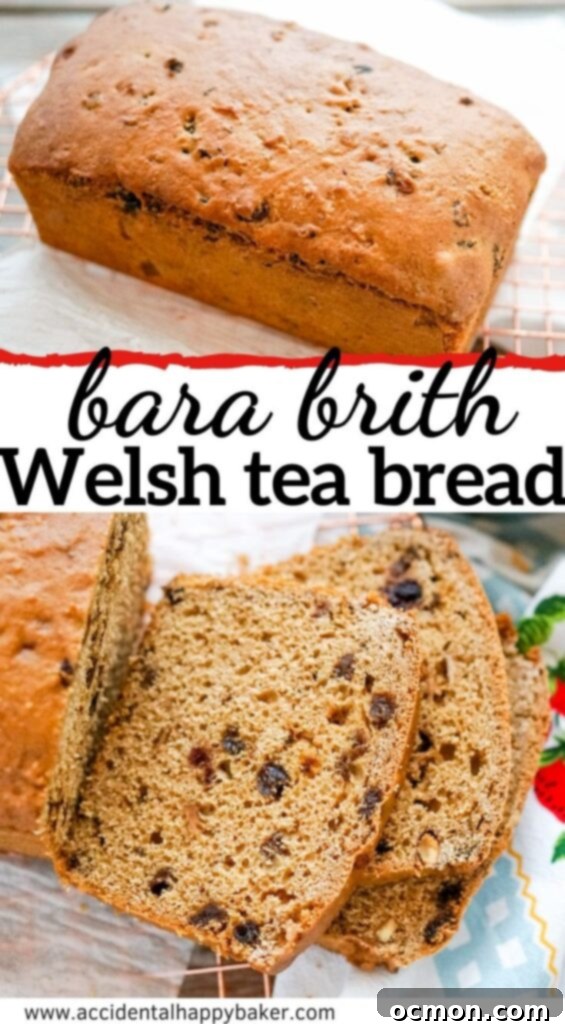
Effortless Bara Brith: Your Guide to a Delicious, Quick Welsh Tea Loaf Recipe
Bara Brith, often affectionately known as Welsh tea loaf, stands as a delightful cornerstone of Welsh culinary heritage. This rich, moist fruit bread, infused with the subtle aromatics of tea, is not only a national favorite but also a truly simple pleasure to bake at home. What makes *this* particular Bara Brith recipe so special is its incredible ease and efficiency. Unlike traditional yeast-leavened breads that demand extensive time for rising and kneading, this quick bread recipe bypasses those lengthy steps, making it an ideal project for even the most novice bakers. With just a handful of readily available ingredients and a straightforward, step-by-step process, you can effortlessly create a loaf that tastes like it came straight from a Welsh bakery. Its reliability and consistently delicious results mean you’ll find yourself returning to this quick bread recipe time and again, whether for a cozy morning breakfast, a delightful afternoon tea, or a comforting treat any time of day.
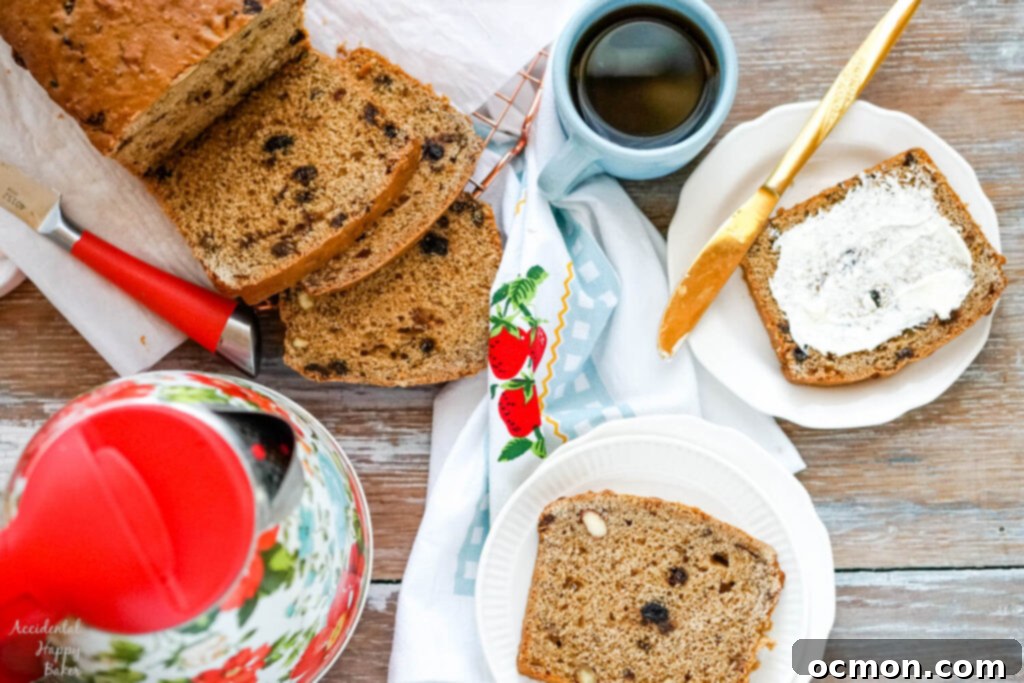
Beyond its effortless preparation, one of the most remarkable qualities of this fruity Bara Brith is how beautifully it ages. In fact, many connoisseurs agree that this Welsh tea loaf tastes even better a day or two after it’s baked, allowing the flavors to meld and deepen. The secret to its enduring freshness lies in the pre-soaking of the dried fruit before baking. This crucial step ensures the fruit becomes plump and hydrated, not only infusing the bread with its sweet, tangy essence but also steadily releasing moisture into the crumb over several days. This natural process prevents the loaf from drying out, maintaining its rich, tender texture for an impressive period – it can easily stay fresh and delicious for up to a week when stored properly in an airtight container at room temperature. For busy families or anyone needing a convenient, wholesome option, this makes Bara Brith an absolute lifesaver. It’s perfect as a quick grab-and-go breakfast, a satisfying midday snack, or a delightful accompaniment to your afternoon cuppa. Its comforting, fruity taste is universally appealing, making it a beloved staple in many households, including my own, where my kids simply adore it.
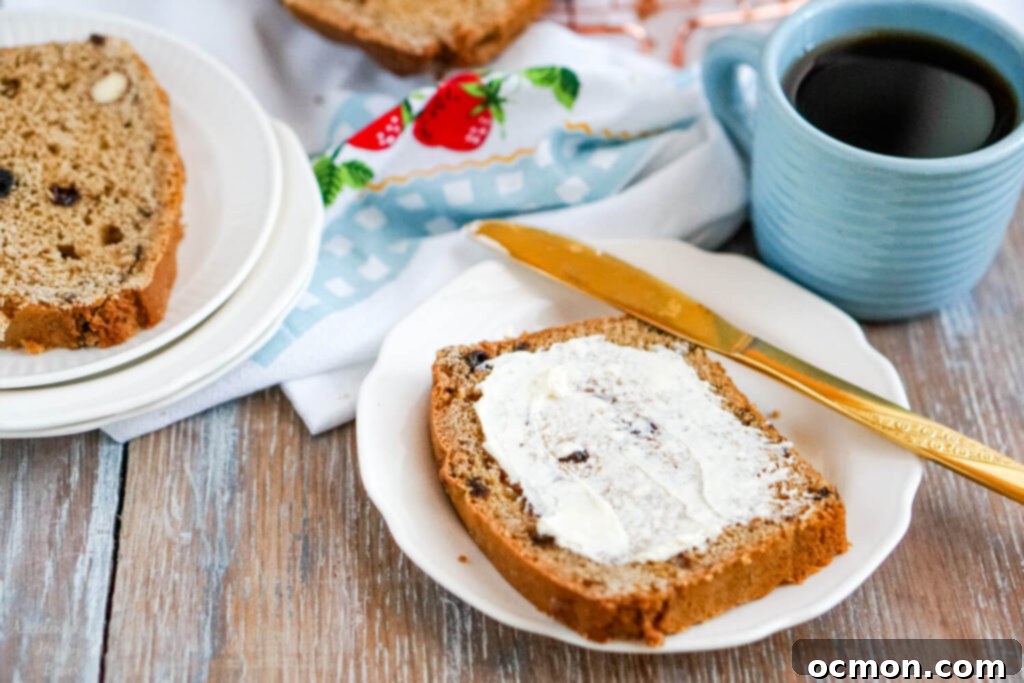
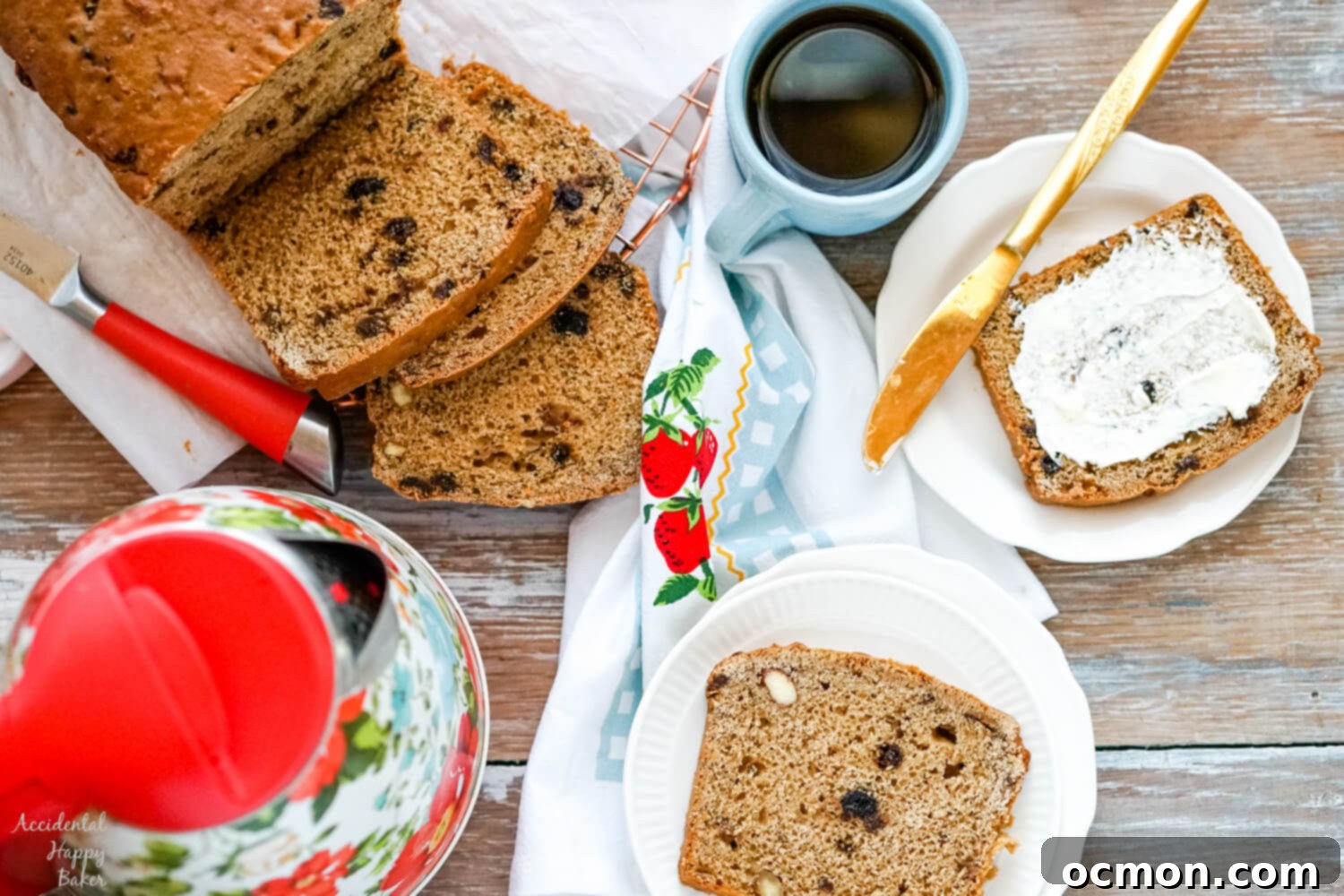
The name ‘Bara Brith’ itself carries a poetic charm, translating directly from Welsh as ‘speckled bread.’ This delightful moniker refers to the abundant dried fruits dotted throughout the loaf, creating a beautiful, characteristic speckled appearance. Traditionally, these ‘speckles’ are a mix of plump raisins, tart currants, and often sultanas, which, for many outside the UK (including myself, a “yank” discovering this gem), are simply known as golden raisins. This rich tapestry of dried fruit is what gives Bara Brith its signature sweetness and chewy texture. Historically, Bara Brith holds a cherished place in Welsh culture, frequently making an appearance at high tea, where it’s served in generous, thick slices, often slathered with a generous layer of salted butter. The combination of the sweet, fruit-laden bread with the savory richness of butter is simply divine. However, its versatility means it’s not confined to tea time. Whether enjoyed for breakfast, as a comforting snack, or even a light dessert, this Welsh tea bread truly is perfect any time of day, offering a comforting taste of tradition with every bite.
My Simplified Bara Brith: A Modern Twist on a Welsh Classic
While Bara Brith has deep roots in Welsh culinary tradition, this particular recipe offers a slightly modernized, quicker approach. As a baker from Missouri, not Wales, my aim was to create an equally delicious version that fits seamlessly into a busy schedule without compromising on flavor or texture. Many authentic Welsh tea bread recipes prescribe soaking the dried mixed fruit in tea overnight. This extended soak undoubtedly contributes to a richer, deeper flavor infusion and ensures the fruit is incredibly plump. However, for those moments when time is of the essence, or when impatience gets the better of us, I’ve developed a method that achieves fantastic results in significantly less time. By combining the dried fruit and tea directly in boiling water, we effectively ‘fast-track’ the soaking process. This rapid infusion still thoroughly plumps and softens the fruit, allowing it to release its moisture and sweeten the bread, while simultaneously imparting that characteristic tea flavor and beautiful amber hue. The outcome is a wonderfully moist and flavorful loaf, ready to enjoy in a fraction of the traditional preparation time.
The choice of tea plays a crucial role in developing the signature flavor of Bara Brith. For this recipe, simplicity is key. My preferred teas are robust varieties like English Breakfast tea, aromatic Earl Grey, or any good quality plain black tea. These teas offer a strong, classic flavor profile that complements the dried fruit without overpowering it. It’s best to avoid highly floral or overtly spiced teas, as they might introduce notes that clash with the traditional Bara Brith taste. Another subtle but impactful addition in my recipe is a ‘smidge’ of buttermilk. While not always found in the most traditional versions, buttermilk brings a lovely richness and a delicate tang to the bread. Its slight acidity interacts beautifully with the self-rising flour, resulting in an incredibly tender crumb and a subtly enhanced overall flavor that elevates this humble fruit loaf to new heights of deliciousness.
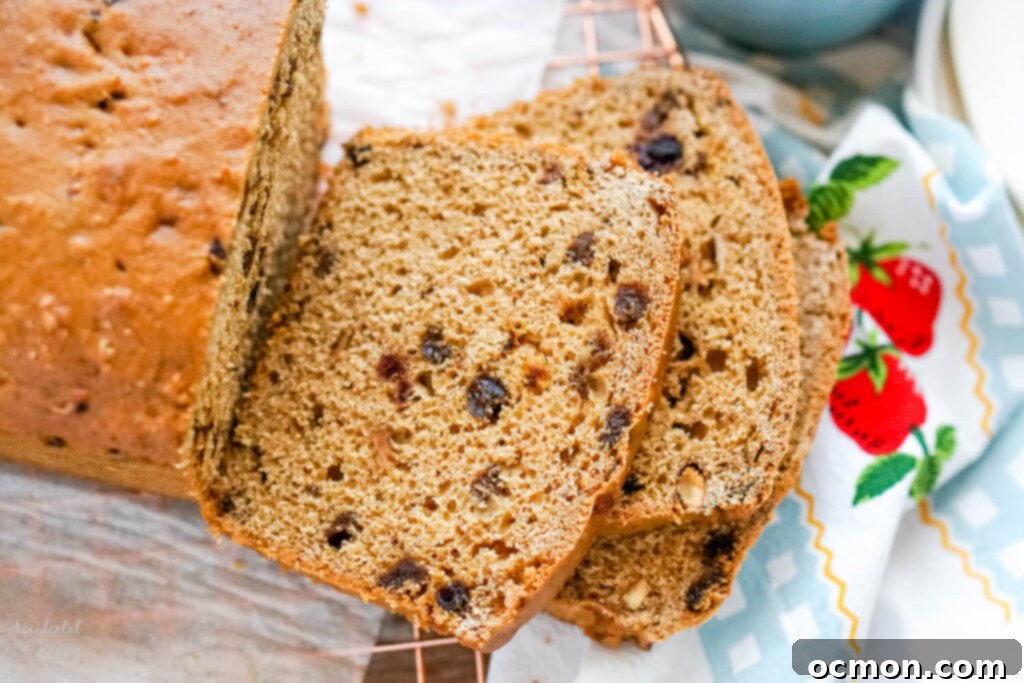
One notable adaptation in my recipe concerns the quantity of dried fruit. You’ll find that I use a more moderate amount of dried fruit compared to some traditional tea loaf recipes, which can sometimes be overwhelmingly dense with fruit. My preference is for a balance that allows the bread’s tender texture and tea-infused flavor to shine through, while still ensuring every slice is generously speckled with sweetness. The specific dried fruit blend I’ve showcased in the accompanying photographs is a vibrant mix featuring dried apples, sweet blueberries, succulent plums, rich figs, classic raisins, and even a few whole almonds for a subtle textural contrast. However, the beauty of this recipe lies in its adaptability. You can truly customize the fruit blend to your liking. Feel free to use your favorite combination of dried fruits – whether that’s a traditional mix of currants and sultanas, or something more adventurous like dried cherries, cranberries, or even chopped apricots. A blend such as Trader Joe’s Golden Berry Blend, with its diverse array of smaller, flavorful fruits, would be an excellent choice. The main consideration is to avoid excessively large pieces or chunky fruit, as these can make the loaf difficult to slice neatly and may not distribute evenly throughout the batter. Aim for smaller, uniformly sized pieces for the best results and a consistent texture in your Bara Brith.
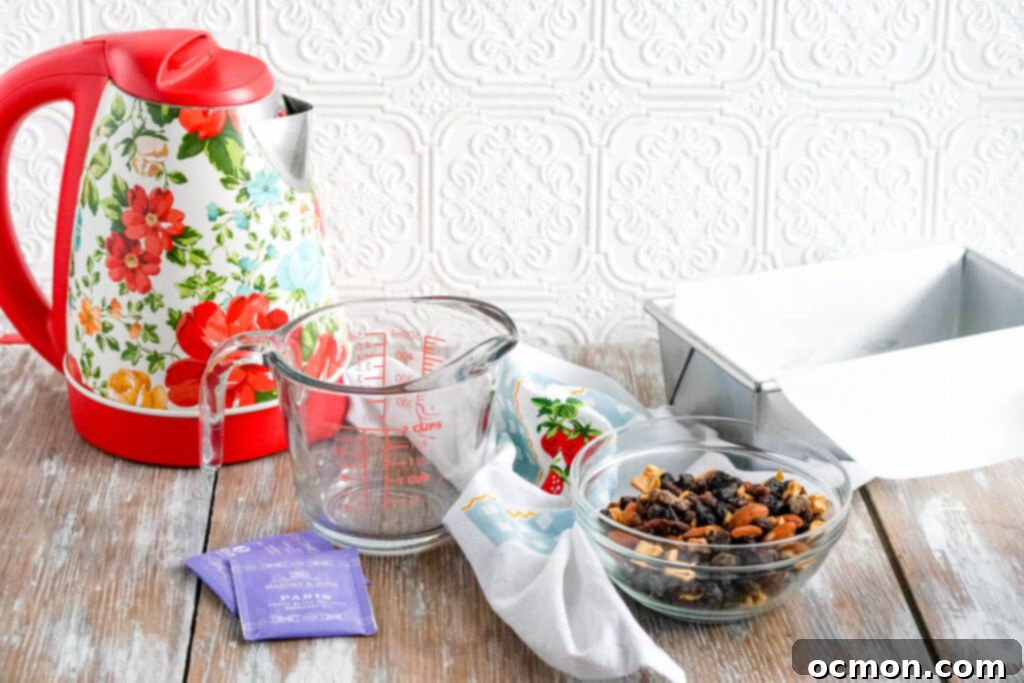
The Magic of Self-Rising Flour: Convenience and Consistency
Let’s delve into one of the key ingredients that contributes to the effortless nature of this Bara Brith recipe: self-rising flour. If you’re wondering, “Do I absolutely *have* to use self-rising flour?”, the simple answer is no. You certainly don’t! For those who prefer to keep their pantry stocked with all-purpose flour, or if you simply don’t have self-rising flour on hand, you can easily create your own homemade version. Typically, this involves combining all-purpose flour with a precise amount of baking powder and a pinch of salt. The general rule of thumb is to add 1 ½ teaspoons of baking powder and ¼ teaspoon of fine salt for every cup of all-purpose flour. This homemade blend works perfectly and ensures your quick bread still achieves that desired lift and tender crumb.
However, I must confess, once you begin incorporating self-rising flour into your quick bread and biscuit baking repertoire, you’ll likely want to keep a bag readily available. Its sheer convenience is unparalleled. By pre-mixing the leavening agent and salt directly into the flour, it streamlines the baking process, eliminating extra measuring steps and reducing the chances of forgetting an ingredient. This ‘all-in-one’ flour simplifies things immensely, particularly for quick breads like Bara Brith, where consistent rise and texture are key. For a busy baker like myself – someone who admittedly loves the simplicity of baking and enjoys fresh bread with virtually every meal – self-rising flour is a true kitchen hero. It takes the guesswork out of leavening, ensuring a beautifully risen, light, and airy loaf every time, without any added fuss.
More Easy Quick Bread Recipes to Try:
- Honey Beer Bread
- Blackberry Bread
- Downeast Maine Pumpkin Bread
- Pina Colada Banana Bread
Step-by-Step Instructions for Making Bara Brith:
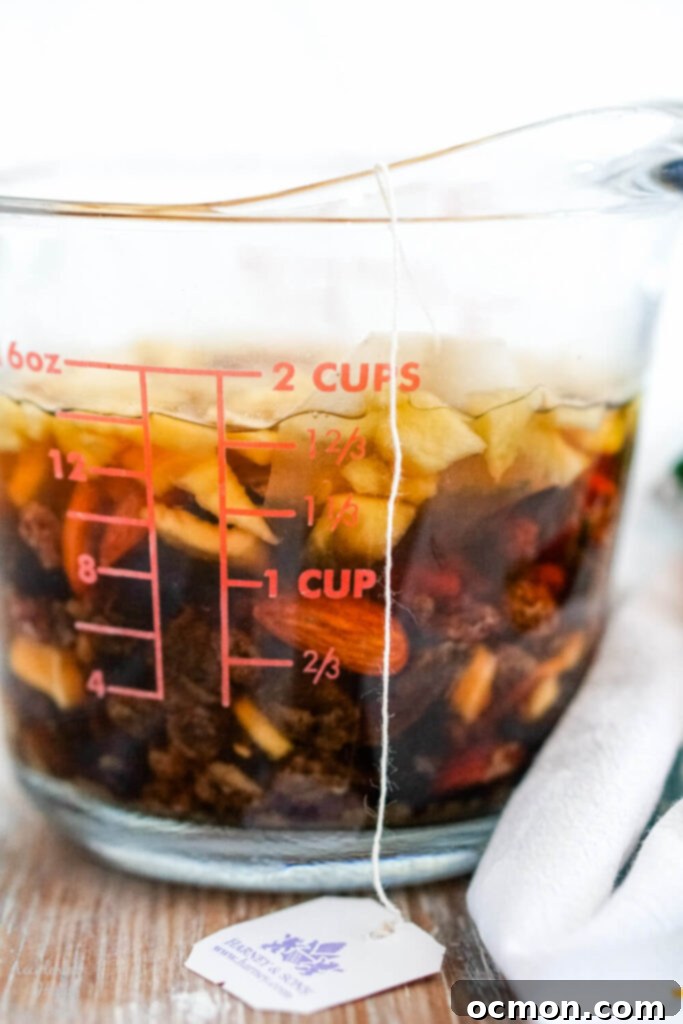
Step 1: Steep the Fruit and Tea. Begin by carefully measuring 1 ¼ cups of boiling water into a heat-proof liquid measuring cup or a small bowl. Into this hot water, add 1 cup of your chosen dried fruit blend and one tea bag (or a tea ball filled with 1 ½ teaspoons of loose black tea). Stir gently to ensure all the fruit is submerged. This crucial steeping process will plump and soften the dried fruit while infusing the water with a rich tea flavor. Allow this mixture to sit undisturbed until it has completely cooled to room temperature. This typically takes about an hour, but you can prepare it further in advance if needed. Once cooled, remember to remove and discard the tea bag before proceeding to the next step, leaving only the flavorful, plumped fruit and tea-infused liquid.
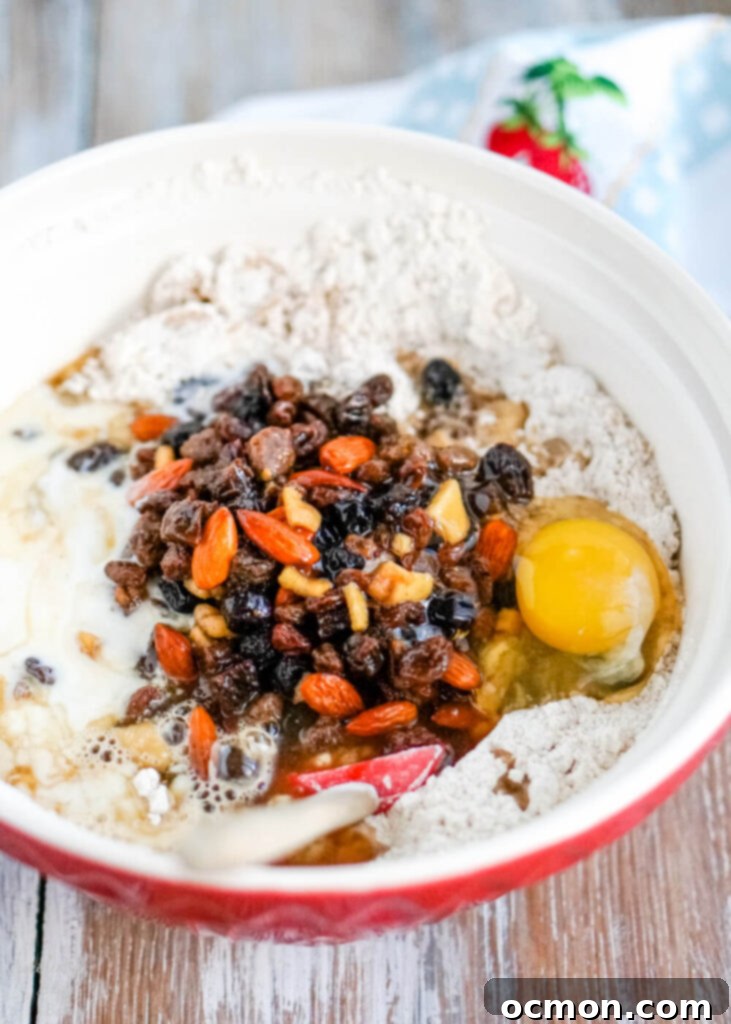
Step 2: Combine Wet and Dry Ingredients. While your fruit and tea mixture is cooling, preheat your oven to 350°F (175°C) and prepare your loaf pan. In a large mixing bowl, combine the dry and wet ingredients. Pour the cooled tea and fruit mixture (without the tea bag) into the bowl. Add the self-rising flour, light brown sugar, one large egg, and the ¼ cup of buttermilk. Using a sturdy spoon or spatula, stir all the ingredients together until they are just combined. It’s important not to overmix the batter; a few lumps are perfectly fine and often lead to a more tender bread. Overmixing can develop the gluten in the flour too much, resulting in a tough loaf.
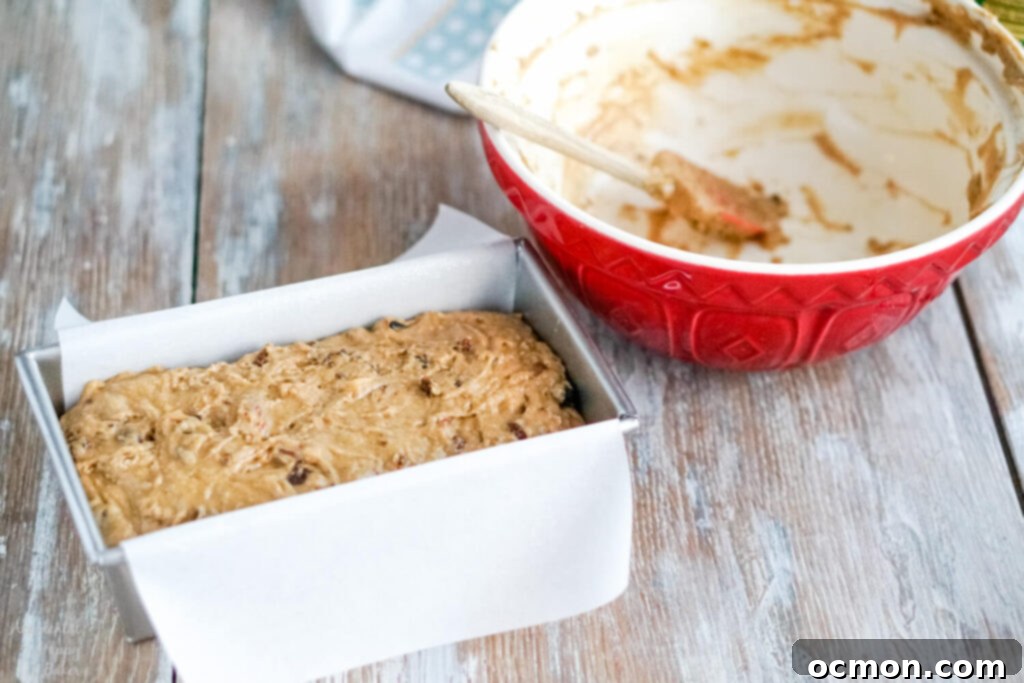
Step 3: Prepare and Fill the Loaf Pan. For a truly flawless release, start by lightly spraying a standard 9×5 inch loaf pan with nonstick cooking spray. This initial layer helps the parchment paper adhere smoothly. Next, line the pan with parchment paper, allowing some overhang on the longer sides. This parchment “sling” creates handles that will allow you to effortlessly lift the baked Bara Brith from the pan. Carefully pour or spoon the prepared bread batter into the lined loaf pan, spreading it evenly with your spatula. Make sure the top is relatively smooth to ensure an even bake and a pleasant crust.
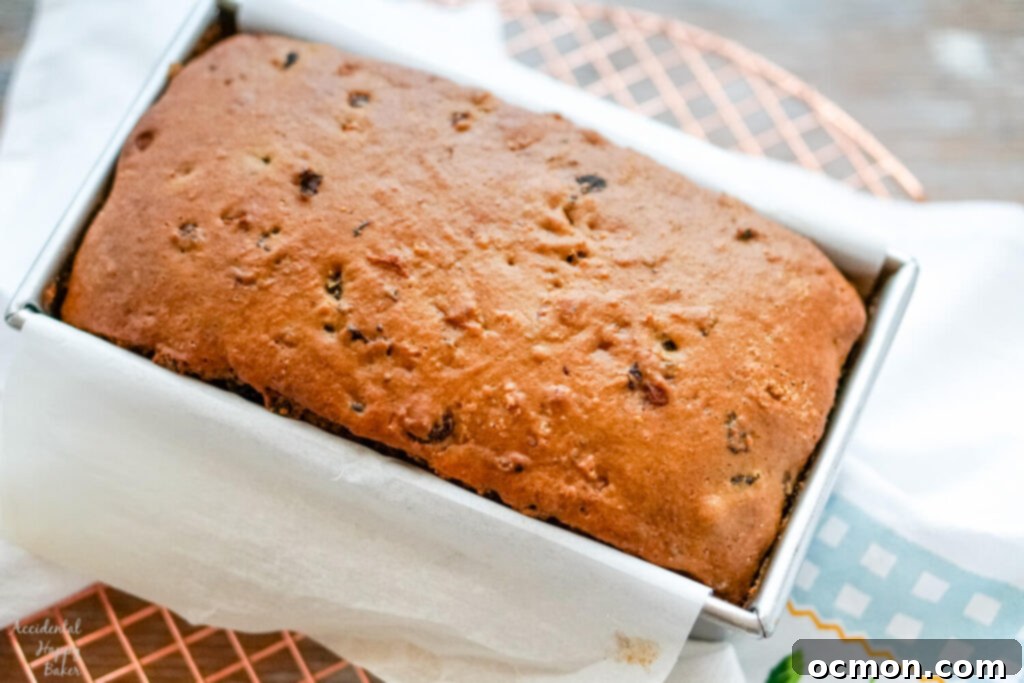
Step 4: Bake to Golden Perfection and Cool. Place the prepared loaf pan onto the center rack of your preheated oven. Bake at 350°F (175°C) for approximately 1 hour and 15 minutes to 1 hour and 30 minutes. Baking times can vary slightly depending on your oven, so keep an eye on it. The Bara Brith is ready when it has risen beautifully, boasting a rich golden-brown color on top, and a wooden skewer or toothpick inserted into the very center of the loaf comes out completely clean. If you notice the top browning too quickly before the center is cooked, you can loosely tent the loaf with aluminum foil for the last 15-20 minutes of baking. Once baked, remove the pan from the oven and let the bread cool in the pan for 10 minutes before carefully lifting it out using the parchment paper overhang. Transfer the loaf to a wire rack to cool completely before slicing and serving. This cooling time is essential for the bread to set properly and for the flavors to fully develop.
Pin this recipe or click the ❤️ to save it for later!
Bara Brith (Welsh Tea Bread)
Print
Rate
SaveSaved!
Ingredients
- 1 1/4 cup boiling water
- 1 cup dried fruit blend* (see notes for suggestions on types and combinations)
- 1 tea bag* (or 1 1/2 teaspoon loose black tea in a teaball, choose a simple, robust black tea)
- 2 3/4 cup self-raising flour
- 3/4 cup light brown sugar
- 1 large egg
- 1/4 cup buttermilk
Instructions
-
Pour 1 1/4 cup boiling water into a heat-proof liquid measuring cup or bowl. To this, add 1 cup dried fruit and one tea bag or loose leaf tea in a teaball. Allow it to steep together until it comes to room temperature (about 1 hour). Remove the tea bag and discard.
-
Preheat your oven to 350°F (175°C). Lightly spray a 9×5 inch loaf pan with nonstick cooking spray, then line it with parchment paper, leaving an overhang on the longer sides. This ensures easy removal of the baked bread.
-
In a medium-sized mixing bowl, combine the self-rising flour with the light brown sugar, large egg, buttermilk, and the cooled tea and fruit mixture. Mix until all of the dry ingredients are just well incorporated. Be careful not to overmix the batter.
-
Spread the batter evenly into your prepared loaf pan. Bake in the preheated oven on the center rack at 350°F (175°C) for approximately 1 hour and 15 minutes to 1 hour 30 minutes, or until the top is golden brown and a toothpick inserted in the center comes out clean.
-
Let the bread cool in the pan for 10 minutes before carefully lifting it out onto a wire rack to cool completely. Cooling thoroughly allows the bread to set and enhances its flavor and texture.
Notes
Picking Dried Fruit Blends
The beauty of Bara Brith is its adaptability to various dried fruits. Excellent choices include: classic raisins, tart currants, sweet sultanas (golden raisins), dried cherries, blueberries, cranberries, chopped dates, figs, apricots, and even small pieces of dried apples. Ensure fruit pieces are not excessively large for even distribution.
Tea Suggestions for this Bread Recipe: For a robust and authentic flavor, choose simple, strong black teas. English Breakfast tea, aromatic Earl Grey tea, or any good quality plain black tea work wonderfully. Avoid overly floral or highly flavored herbal teas that might clash with the fruit.
Dark brown sugar can also be used in place of light brown sugar for a deeper, more molasses-like flavor.
Self-Rising Flour Substitute: If you don’t have self-rising flour, you can easily make your own. For 2 ¾ cups of self-rising flour, combine 2 ¾ cups of all-purpose flour with 4 teaspoons of baking powder and ¾ teaspoon of fine salt. Sift them together thoroughly before using.
Recommended Products
Nutrition