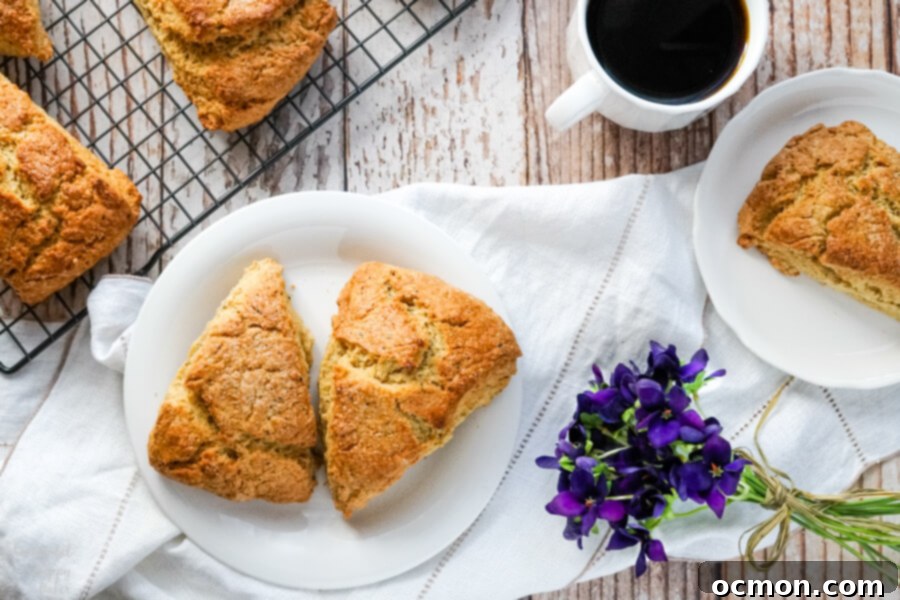
Flaky & Fragrant Earl Grey Scones: The Ultimate Tea Time Treat Recipe
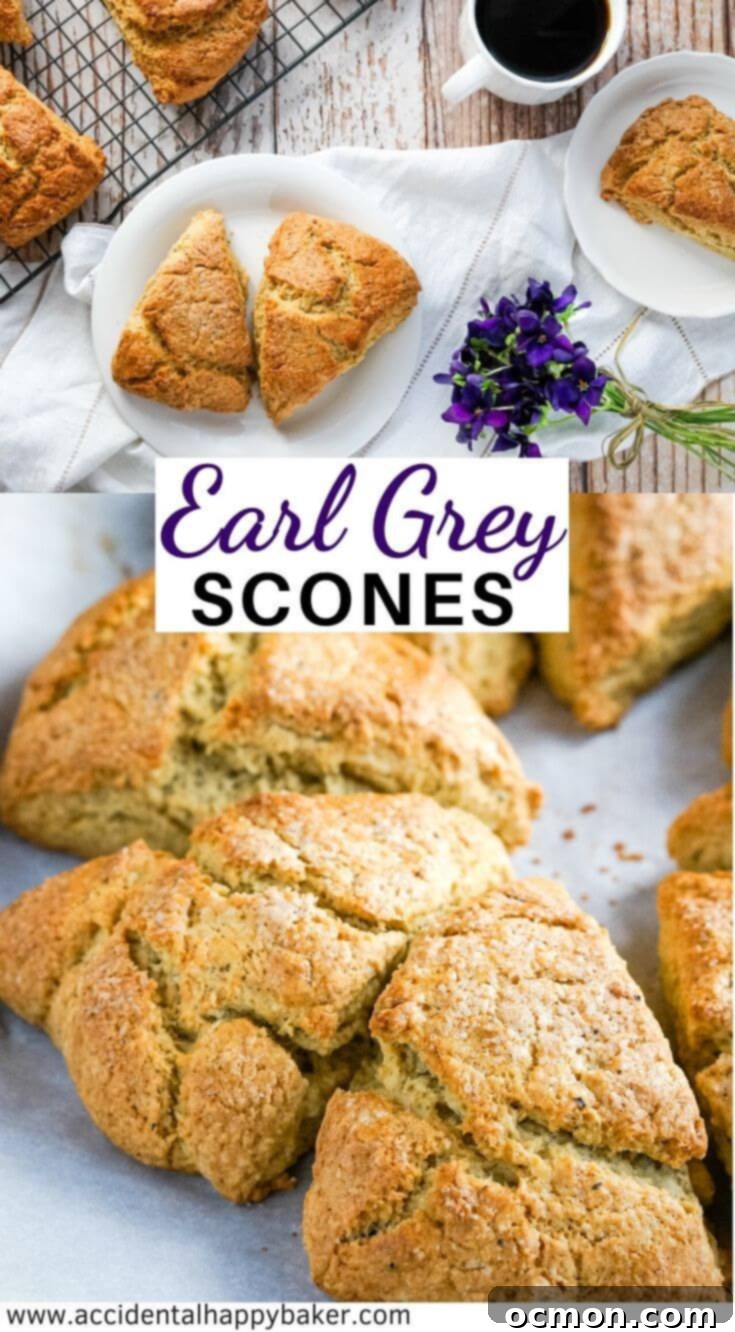
For tea enthusiasts, there’s nothing quite like the comforting aroma and exquisite taste of Earl Grey tea. Now, imagine that distinctive, citrus-infused flavor baked into light, tender, and incredibly flaky scones. These Earl Grey Scones are a dream come true for anyone who appreciates a sophisticated twist on a classic treat, perfect for elevating your afternoon tea, breakfast, or simply a moment of indulgence. With their delicate bergamot notes and irresistible texture, these scones are truly a delight you won’t be able to resist.
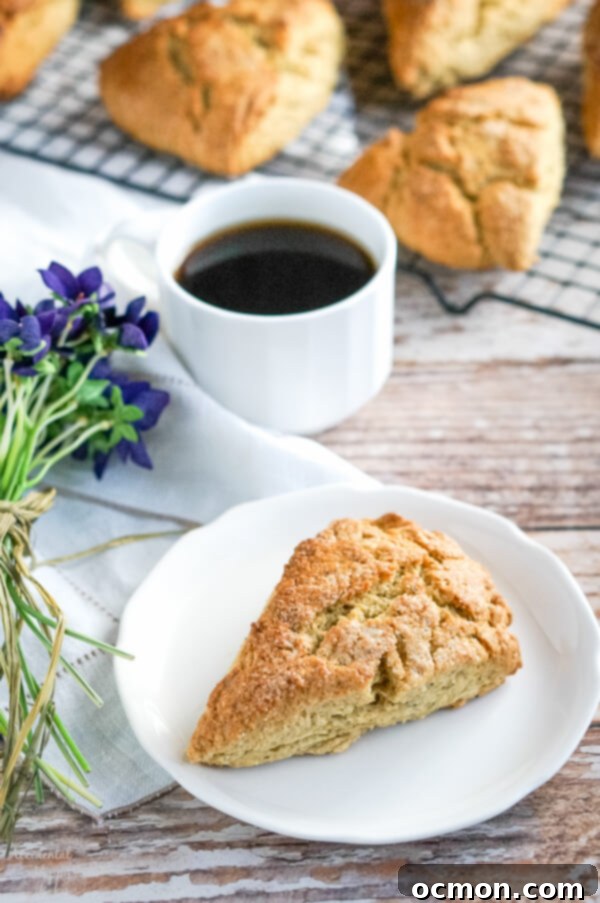
As a true tea fanatic, my cupboard is always stocked with an impressive collection, boasting easily thirty different varieties at any given time. Whether it’s piping hot on a chilly morning or refreshingly iced on a warm afternoon, tea is a daily ritual, often enjoyed three times a day or more. My long-standing desire to incorporate the beloved Earl Grey tea into a baked good finally came to fruition with these scones. Their rich, buttery foundation provides the perfect canvas for Earl Grey’s unique flavor profile, making them an ideal starting point for tea-infused baking adventures.
What Gives Earl Grey Tea Its Signature Flavor? The Magic of Bergamot
The distinctive, aromatic essence of Earl Grey tea comes from one remarkable ingredient: bergamot oil. But what exactly is bergamot? It’s a citrus fruit, often described as an “ugly” variety of green orange, primarily cultivated in the sun-drenched region of Calabria, Italy, although it can also be found in other parts of the world. The oil extracted from its peel is what imbues Earl Grey with its characteristic bright, floral, and slightly spicy citrus notes. This unique flavor is what makes Earl Grey so beloved and such an exciting ingredient to bake with, offering a sophisticated aroma and taste that is both familiar and exotic.
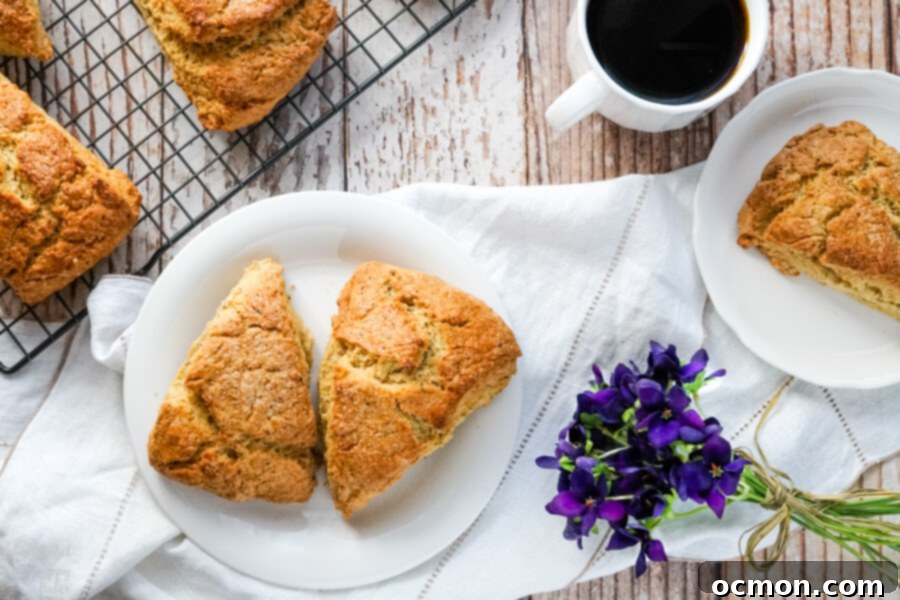
Why Earl Grey Scones are a Must-Try
Scones, with their rich history and delightful versatility, are practically synonymous with tea. The delicate crumb, the buttery flavor, and the slight crispness of a perfectly baked scone create an ideal pairing for the robust and fragrant notes of Earl Grey. When infused into scones, the bergamot oil subtly perfumes the dough, creating a harmonious blend of flavors. It’s a sophisticated twist on a traditional favorite, transforming an ordinary scone into an extraordinary culinary experience. These scones are not just a treat; they’re an experience, transporting you to a cozy tea room with every bite.
Essential Ingredients for Your Earl Grey Scones
Crafting the perfect Earl Grey scones requires a careful selection of ingredients, each playing a vital role in achieving that coveted light, flaky texture and rich flavor. Here’s a breakdown of what you’ll need and why each component is important:
- Earl Grey Tea (Loose Leaf or Tea Bags): This is the star of our show! You’ll need it both brewed for its liquid flavor and as fine tea leaves directly in the dough for a more intense aroma and visual appeal. Using high-quality tea will make a noticeable difference in the final flavor.
- Boiling Water: For brewing a strong, concentrated tea extract that will infuse the scones with that signature bergamot flavor.
- All-Purpose Flour: Forms the primary structure of the scones.
- Cake Flour: This is a crucial addition for tenderness! Cake flour has a lower protein content than all-purpose flour, which helps create a softer, more delicate crumb, preventing the scones from becoming tough.
- Light Brown Sugar: Adds a subtle sweetness and moisture, contributing to a softer texture and a slightly caramelized flavor.
- Baking Powder & Baking Soda: These are our leavening agents, essential for creating that beautiful rise and flaky layers. They react with the acidic ingredients (like buttermilk, though here primarily the cream when combined with other elements) to produce carbon dioxide, giving the scones their airy structure.
- Salt: A pinch of salt is vital for balancing the flavors and enhancing the sweetness of the scones.
- Unsalted Butter (Cold and Cubed): The secret to flaky scones! Cold butter prevents it from fully incorporating into the flour, instead creating pockets of steam during baking that result in distinct, flaky layers. Using unsalted butter allows you to control the overall salt content of the recipe.
- Egg: Acts as a binder, adds richness, and contributes to the golden color of the crust.
- Heavy Cream: Absolutely indispensable for the classic scone texture. Its high fat content provides richness and moisture, contributing to a tender crumb and a moist interior. We’ll discuss substitutions below, but heavy cream is highly recommended.
- Vanilla Extract: Enhances the overall flavor profile, complementing the bergamot without overpowering it.
- Sugar (for topping): A final sprinkle of granulated sugar before baking creates a beautiful sparkling crust and adds a touch of sweetness to the exterior.
Choosing Your Earl Grey: All Varieties Welcome!
One of the beautiful aspects of this recipe is its versatility when it comes to your choice of Earl Grey. I intentionally crafted the other ingredients to be mellow, ensuring that the unique character of any Earl Grey tea can truly shine through. Whether you prefer the classic blend or a more adventurous variation, feel free to use your favorite! Options like Lady Grey (with added orange and lemon peel), Earl Grey Green (a lighter base with bergamot), Lavender Earl Grey (a floral twist), or Double Bergamot Earl Grey (for an extra citrus punch) will all work wonderfully. Don’t hesitate to experiment with different brands and blends to discover your personal favorite Earl Grey Scone experience!
The Cream Debate: Why Heavy Cream is Non-Negotiable for Perfect Scones
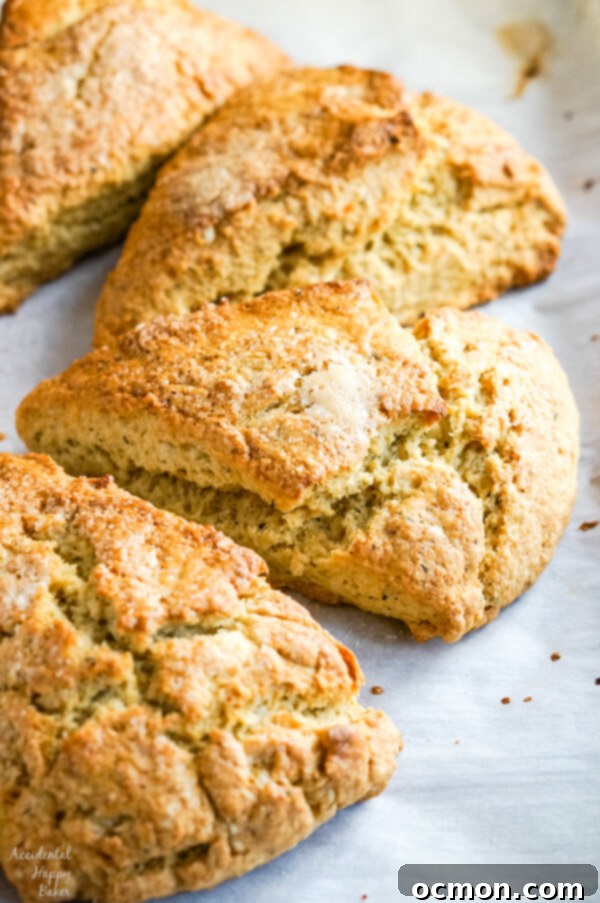
I often receive questions about substituting milk for heavy cream in scone recipes. While you *can* technically make scones with milk, I strongly advise against it if you’re aiming for that truly authentic, flaky, and tender scone experience. Here’s why: heavy cream boasts a significantly higher fat content compared to milk. This fat is essential for creating the rich flavor, moist crumb, and delicate texture that defines a great scone. Milk, with its higher water content and lower fat, will change the consistency of the dough, often resulting in scones that are denser, less tender, and can even have a slightly spongy texture. The flakiness relies heavily on the interaction between cold butter and high-fat liquid. If you find yourself in a real pinch and absolutely must substitute, half-and-half would be a better choice than regular milk, though still not ideal. For the best possible Earl Grey Scones, stick to heavy cream – it’s a small detail that makes a monumental difference.
How to Make Delicious Earl Grey Scones: Step-by-Step Guide
Let’s walk through the process of creating these delightful Earl Grey scones, ensuring every step contributes to a perfect outcome.
1. Brew Your Concentrated Tea
The very first step is to brew your Earl Grey tea. We only need a small amount – about 1/4 cup of brewed tea – but it needs to be exceptionally strong to impart its full flavor into the scones. Use 2 tea bags or 2 teaspoons of loose leaf tea for 1/3 cup of boiling water, letting it steep for 3-5 minutes. Once brewed, remove the tea bags or strain the loose leaves and measure out exactly 1/4 cup. Crucially, allow this brewed tea to cool completely before proceeding. The temperature of your ingredients makes a significant difference in scones; cold tea, like cold butter and cream, is key for a light and flaky final product.
2. Combine Dry Ingredients and Tea Leaves
While your tea is cooling, preheat your oven to 425°F (220°C) and line a baking sheet with parchment paper. In a large mixing bowl, combine your all-purpose flour, cake flour, brown sugar, baking powder, baking soda, and salt. Now for a special touch: carefully cut open one of your Earl Grey tea bags (or add 1 teaspoon of loose leaf tea) and sprinkle the fine tea leaves directly into the dry mixture. You might wonder if it’s safe to eat tea leaves – absolutely! They’re perfectly safe and add an incredible depth of flavor, as well as beautiful flecks that give the scone dough a rustic, elegant appearance. Lightly mix these dry ingredients together with a fork or your fingers.
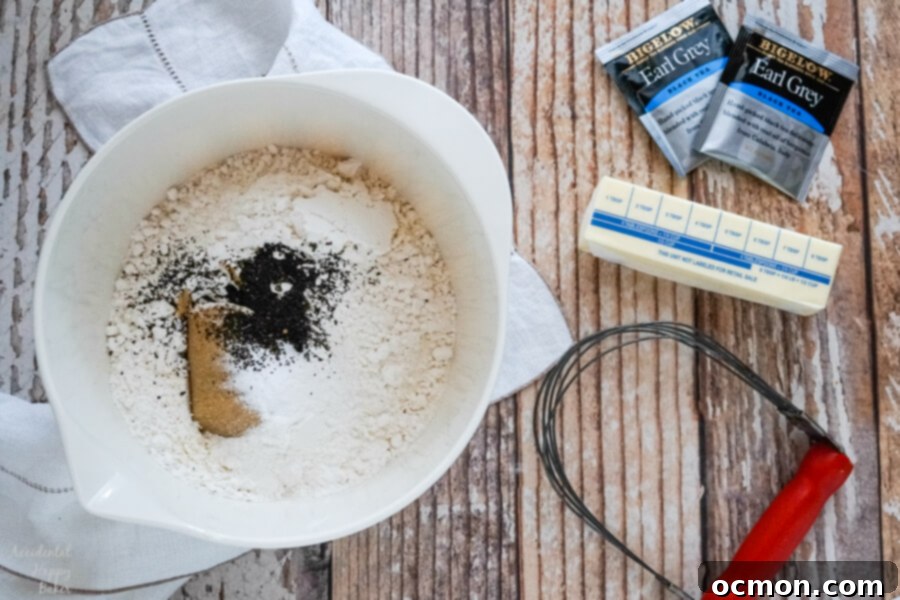
3. Cut in the Cold Butter
Next, it’s time to incorporate the cold, cubed unsalted butter into your dry ingredients. You can do this using a fork, a pastry blender, or even your fingertips. The goal is to work the butter into the flour mixture until it resembles coarse sand or small pea-sized crumbles. The key here is to keep the butter as cold as possible to ensure those flaky layers develop during baking. Avoid overworking the butter, as this will melt it and lead to dense scones instead of light and airy ones.
4. Mix Wet Ingredients and Form the Dough
In a separate bowl or your cooled liquid measuring cup, whisk together the completely cooled Earl Grey tea, the egg, heavy cream, and vanilla extract until well combined. This is your wet mixture. Pour the wet ingredients over the flour and butter mixture. Stir gently with a spoon or spatula, just until the dough comes together. It’s crucial not to overmix at this stage; overworking the dough develops too much gluten, which will result in tough and chewy scones. A few dry streaks are perfectly fine.
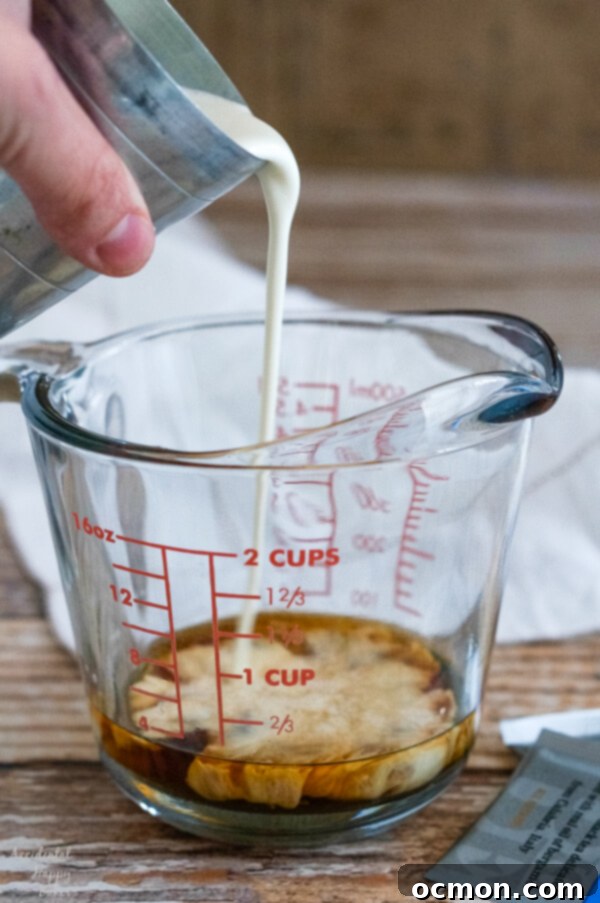
5. Shape, Cut, and Prepare for Baking
Turn the dough out onto a lightly floured surface. Give it a few quick, gentle kneads – just enough for it to truly stick together and form a cohesive mass. Remember, minimal handling is key to tender scones. Pat the dough into a circular disk about 1 to 1.5 inches thick. Using a sharp knife, cut the disk into 8 even wedges, like a pizza. Carefully transfer these wedges to your prepared baking sheet, leaving a little space between each scone. For that beautiful golden crust and extra sweetness, brush the tops of the scones with a tablespoon of cream and then sprinkle them liberally with granulated sugar. Now, we’re ready for the oven, like the posh bakers we truly are!
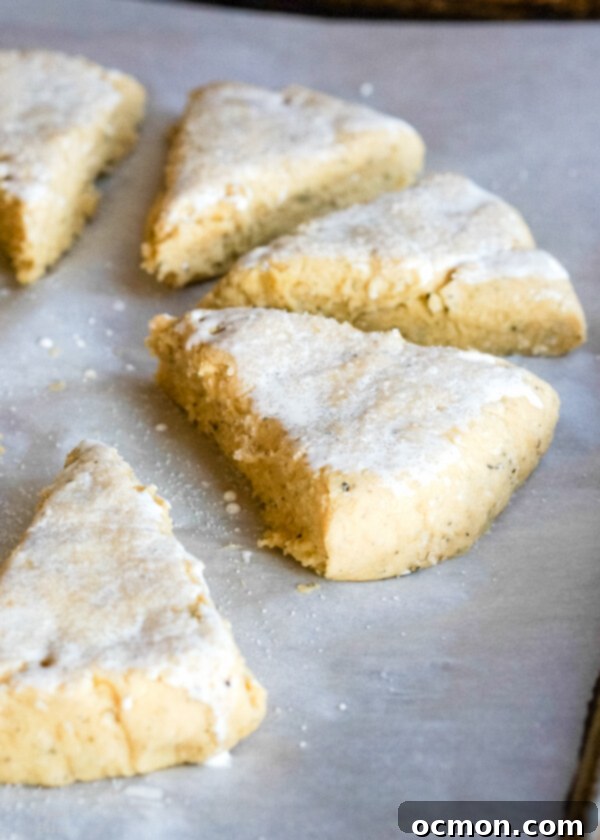
6. Bake to Golden Perfection
Bake the scones in your preheated 425°F (220°C) oven for 18-20 minutes, or until they are beautifully golden brown on top and cooked through. The high temperature helps them rise quickly, creating that desirable flaky interior. Once baked, remove them from the oven and transfer them to a wire rack to cool slightly before serving. The aroma filling your kitchen will be absolutely divine!
Tips for Perfect Scones Every Time
Achieving truly excellent scones is simple if you follow a few key principles:
- Keep Everything Cold: This is the golden rule for flaky scones. Ensure your butter, cream, and even the brewed tea are as cold as possible. Cold ingredients prevent the butter from melting prematurely, allowing it to create steam pockets for flakiness.
- Don’t Overmix or Overhandle: Mix the dough just until combined. Excessive stirring or kneading will develop the gluten, resulting in tough, dry scones. Gentle is the name of the game.
- Use Cake Flour: The addition of cake flour significantly contributes to a more tender and delicate crumb. Don’t skip it if you want the best texture.
- High Heat Baking: Baking at a higher temperature (like 425°F) helps the scones rise quickly and develop a beautiful crust.
- Don’t Twist Your Cutter: If you opt for a round cutter instead of wedges, press straight down and pull straight up. Twisting the cutter can seal the edges of the scone, preventing it from rising properly.
- Serve Fresh: Scones are undeniably at their absolute best when served warm, straight from the oven, or at least on the day they are baked.
Serving Suggestions for Your Earl Grey Scones
These fragrant Earl Grey Scones are wonderful on their own, but they truly sing when paired with classic accompaniments. For a traditional afternoon tea experience, serve them with generous dollops of clotted cream and your favorite fruit jam – strawberry, raspberry, or a tart marmalade would be exquisite. A spoonful of bright lemon curd would also complement the bergamot beautifully. For a simpler touch, a drizzle of honey or a side of fresh berries makes for a lovely pairing. Enjoy them with an extra cup of hot Earl Grey tea, of course, or even a strong black coffee for contrast. They make an elegant addition to any breakfast, brunch, or afternoon tea spread.
Storage Tips for Freshness
While scones are best enjoyed on the day they are baked for peak freshness and flakiness, any leftovers can be stored. Place cooled scones in an airtight container at room temperature for up to 2-3 days. To refresh them, a quick warm-up in a toaster oven or microwave can bring back some of their tenderness. For longer storage, scones freeze beautifully. You can freeze baked scones in an airtight container or freezer bag for up to 3 months. To enjoy, thaw at room temperature and warm gently. You can also freeze unbaked scone wedges on a baking sheet until solid, then transfer them to a freezer bag. Bake from frozen, adding a few extra minutes to the baking time.
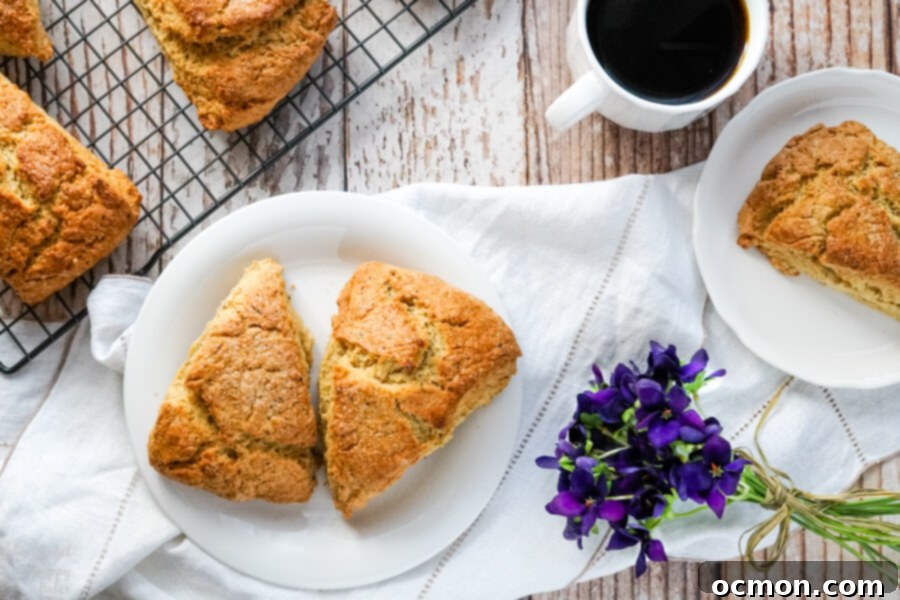
Earl Grey Scones
Light and flaky scones are delicately flavored with Earl Grey tea for a tea time treat you can’t resist.
Print
Rate
SaveSaved!
Ingredients
- 3 bags Earl Grey tea (or 3 teaspoons loose Earl Grey tea)
- 1/3 cup boiling water
- 2 1/2 cups all purpose flour
- 1/2 cup cake flour
- 1/3 cup brown sugar
- 2 1/2 teaspoons baking powder
- 1/2 teaspoon baking soda
- 1/4 teaspoon salt
- 1 stick unsalted butter (cold and cut into cubes)
- 1 egg
- 2/3 cup heavy cream
- 1 teaspoon vanilla extract
- 1 Tablespoon cream
- 2 teaspoons sugar
Instructions
-
Preheat the oven to 425 degrees F (220 C) and prepare a baking sheet with parchment paper. Set aside.
-
In a small bowl or 2 cup liquid measuring cup, add 2 teabags or 2 teaspoons of the Earl Grey tea to ⅓ cup boiling water. Allow to steep for 3-5 minutes to create a strong brew. Remove the tea bags or loose leaf tea using a strainer, then measure out exactly ¼ cup of the brewed tea. Let it cool completely to room temperature or colder.
-
Meanwhile, in a large mixing bowl, add the remaining teaspoon of Earl Grey tea leaves (if using bagged tea, cut the bag open and pour the leaves into the bowl). Add the all-purpose flour, cake flour, brown sugar, baking powder, baking soda, and salt. Lightly mix all the dry ingredients using a fork or your fingers until just combined.
-
Add the cold, cubed butter to the flour mixture. Using a fork, a pastry blender, or your fingers, cut the butter into the dry ingredients until the mixture is coarse and resembles sand with some pea-sized butter pieces. Ensure the butter remains as cold as possible.
-
In a separate bowl, add the egg, 2/3 cup heavy cream, and vanilla extract to the completely cooled Earl Grey tea. Whisk gently to combine these wet ingredients. Pour this wet mixture over the dry ingredients in the large mixing bowl and stir just until the dough is combined and barely holds together. Do not overmix.
-
Turn the dough out onto a lightly floured surface. Give it a few quick, gentle kneads – just enough to bring it together into a cohesive ball. Pat the dough into a circular disk that is approximately 1 to 1 ½ inches thick. Using a sharp knife or a pastry cutter, cut the disk into 8 even wedges. Place these wedges on the prepared baking sheet, leaving a small space between each scone. Brush the tops of the scones with the remaining 1 tablespoon of cream and then sprinkle liberally with the 2 teaspoons of granulated sugar.
-
Bake at 425 degrees F (220 C) for 18-20 minutes, or until the scones are golden brown on top and cooked through. Transfer to a wire rack to cool slightly before serving warm.
Notes
Craving more delightful scone recipes? Me too! Here are some of my favorite tried and true scone creations that I think you’ll adore:
-
Instant Oatmeal Scones
-
Strawberry Lemon Scones
-
Blackberry Cream Cheese Scones
-
Lemon Sugar Scones
-
Eggnog Scones
-
Cranberry Orange Scones
-
Whole Grain Scones
-
Caramel Apple Scones
-
Sweet Potato and Sage Scones
-
Banoffee Drop Scones
Pin this recipe for later and share the tea time joy!
Accidental Happy Baker is a participant in the Amazon Services LLC Associates Program, an affiliate advertising program. As an Amazon Associate I earn from qualifying purchases at amazon.com.