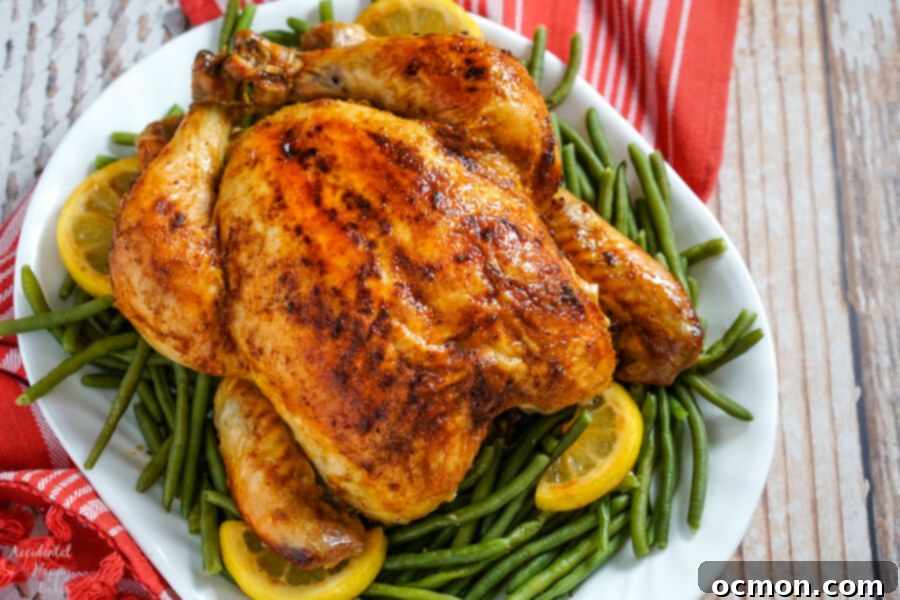
Master the Art of Easy Oven Roasted Whole Chicken: Perfectly Tender & Juicy Every Time
There’s an undeniable magic in a perfectly roasted whole chicken. Its golden-crisp skin, succulent meat, and comforting aroma can transform any meal, from a simple weeknight dinner to a festive gathering. And despite common misconceptions, achieving this culinary masterpiece at home is surprisingly easy and incredibly economical. This guide will walk you through creating a tender, juicy, classic oven-roasted chicken that will become a staple in your kitchen.
I distinctly remember my early days as a newlywed, venturing into the kitchen as a complete novice. The thought of cooking a whole chicken felt utterly daunting. Terms like “tucking wings,” “trussing legs,” and “carving” conjured images of complex techniques far beyond my comfort zone. It seemed like a task reserved for seasoned chefs, not for someone just learning the basics.
However, as years passed and my family grew, I became more conscious of budgeting and optimizing my time. This led me back to the whole chicken, and to my surprise, I discovered its incredible ease and versatility. What once seemed intimidating quickly became a go-to for delicious, wholesome, and affordable meals.
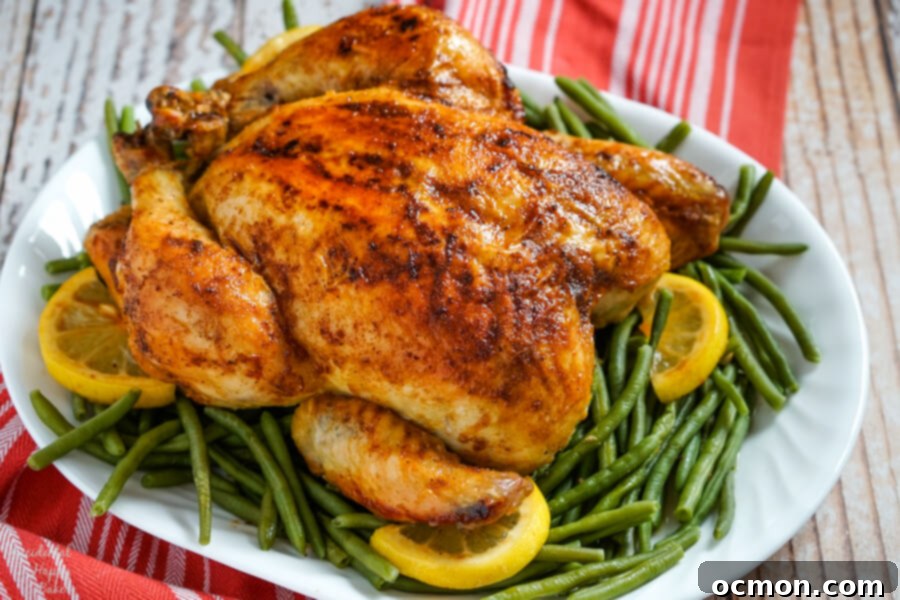
Why You Should Master Roasting a Whole Chicken
If you’ve never roasted a whole chicken before, or if the idea still feels intimidating, let me assure you: it’s a game-changer. Here are compelling reasons why this technique deserves a spot in your cooking repertoire:
- Incredibly Easy & Accessible: You don’t need specialized equipment or advanced culinary skills. A basic roasting pan (or even a cast iron skillet) and an oven are all it takes. The process is largely hands-off, allowing you to focus on other tasks while your delicious meal cooks.
- Budget-Friendly: Buying a whole chicken is almost always more economical per pound than purchasing pre-cut chicken parts. This makes it an excellent choice for stretching your grocery budget, especially for larger families or meal prepping. You get more meat for your money!
- Impressive Presentation: A golden-brown, perfectly roasted chicken makes a magnificent centerpiece for any dinner table. It looks sophisticated and inviting, making it ideal for entertaining guests or simply elevating a family meal.
- Ample Meat for Large Meals & Leftovers: A typical whole chicken provides enough meat to feed a family of 4-6 generously. For smaller families, this means guaranteed leftovers, which are incredibly valuable for future meals. (As a family of six, I often find myself with delicious chicken to spare!)
- Versatility for Future Meals: Leftover roasted chicken is a culinary gift. It can be transformed into countless dishes throughout the week – think chicken salad, tacos, quesadillas, soups, sandwiches, pasta dishes, or quick stir-fries. It’s the ultimate meal prep ingredient.
- Homemade Stock from the Carcass: Don’t throw away the bones! The leftover carcass is the perfect foundation for rich, flavorful homemade chicken stock. This reduces food waste and provides a superior base for soups, sauces, and gravies compared to store-bought options. (Here’s a fantastic crockpot recipe for homemade stock to get you started.)
- Minimal Food Waste: From the meat for your main meal and leftovers to the bones for stock, roasting a whole chicken allows you to utilize nearly every part, embodying truly economical and sustainable cooking.
And then, there’s the most obvious reason: the incredible taste! Imagine tender, juicy chicken bursting with the classic flavors of lemon and rosemary, all encased in a deliciously crispy skin. These timeless flavors make roasted chicken incredibly versatile, pairing beautifully with virtually any side dish you can dream up – from simple roasted vegetables to creamy mashed potatoes or a fresh green salad.
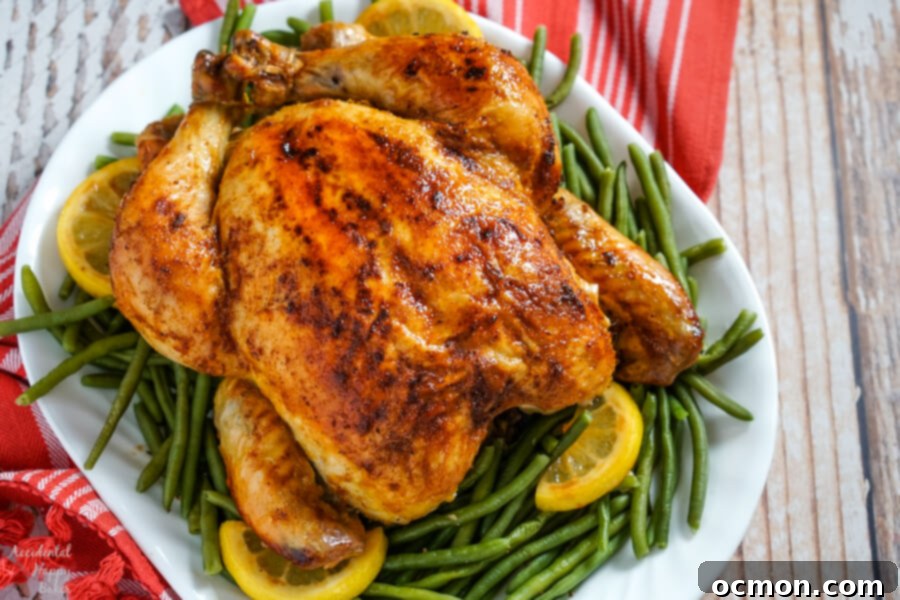
Essential Equipment for Roasting Success
While you don’t need a lot of fancy tools, having the right equipment can make the process even smoother and lead to better results. Here’s what I recommend:
- Roasting Pan: A sturdy roasting pan with a rack allows for air circulation, promoting even cooking and crispy skin.
- Cast Iron Skillet: My personal favorite! A 12-inch cast iron skillet conducts heat beautifully, resulting in wonderfully crisp skin and even cooking. If you don’t own one, seriously consider it. I snagged mine for under $40 on Amazon, and it’s incredibly versatile for so many dishes beyond chicken!
- 9×13 Inch Baking Dish: A standard glass or ceramic baking dish can work in a pinch if you don’t have a dedicated roaster or cast iron. Just be aware that the chicken might sit in its own juices more, potentially affecting skin crispiness at the bottom.
- Meat Thermometer: Absolutely crucial for food safety and ensuring your chicken is perfectly cooked, not overcooked and dry. An instant-read thermometer is your best friend here.
- Kitchen Shears: Handy for trimming excess skin or fat.
- Paper Towels: Essential for patting the chicken dry.
- Kitchen Twine (Optional but Recommended): For trussing the chicken. Unflavored dental floss or plain thread can also work.
How to Roast a Whole Chicken in the Oven: A Step-by-Step Guide
Follow these simple steps for a fool-proof, delicious oven-roasted chicken. Remember, practice makes perfect, and soon these steps will feel like second nature.
Step 1: Preparation is Key – Remove Giblets and Inspect
Before you do anything else, you need to prepare your chicken. Start by reaching inside the chicken cavity and removing the giblets, neck, and liver. These are usually packaged in a small bag inside, but sometimes they might be loose. Occasionally, a chicken might not have any. You can discard them or save them to make gravy or stock if you wish.
Step 2: Clean, Inspect, and Pat Dry
Next, give the chicken a quick rinse under cold water, both inside and out. While rinsing poultry has been debated, if you do rinse, be sure to sanitize your sink and surrounding area afterwards. The most critical part of this step is to inspect the chicken for any remaining pin feathers, loose extra skin, or excess fat. Don’t be surprised if you find a stubborn feather or two – they’re easy to pull out and discard. Use a pair of kitchen shears to trim off any unwanted extra skin or large pockets of fat, especially around the cavity opening. Finally, and this is crucial for crispy skin: pat the chicken thoroughly dry with paper towels. Moisture on the skin prevents it from crisping up nicely in the oven.
Step 3: Choose Your Roasting Vessel
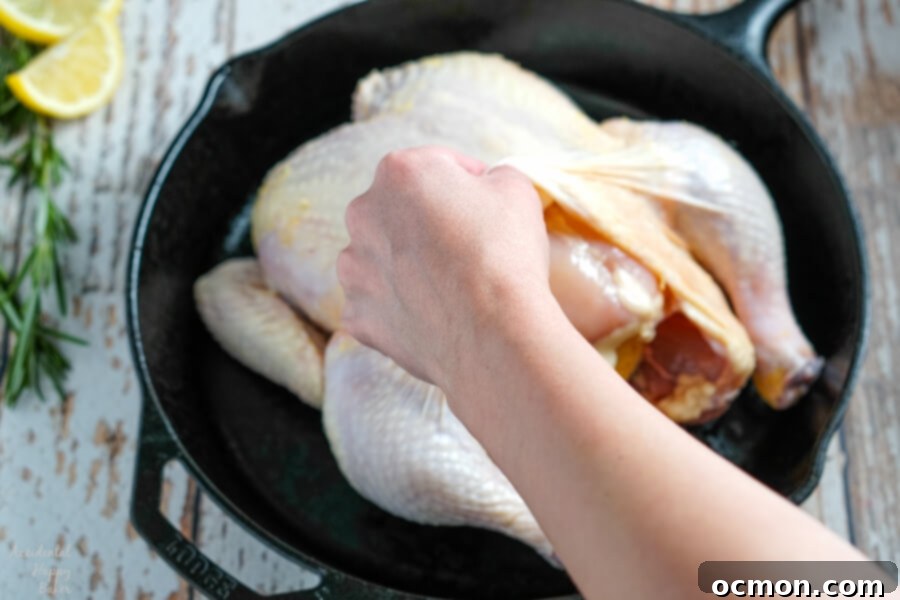
Place your prepared chicken in your chosen pan. As mentioned, I highly recommend a cast iron skillet for its excellent heat distribution and ability to produce an amazing crust. A traditional roasting pan with a rack is also a fantastic choice, allowing juices to drip away and preventing the bottom of the chicken from steaming. If using a 13×9 inch pan, you might want to place a few roughly chopped vegetables (like carrots, celery, and onion) on the bottom to act as a natural rack and add flavor to the pan drippings.
For those interested in alternative cooking methods, you can also roast a chicken in a slow cooker. For instructions on that, read this post.
Step 4: Loosen the Skin for Maximum Flavor
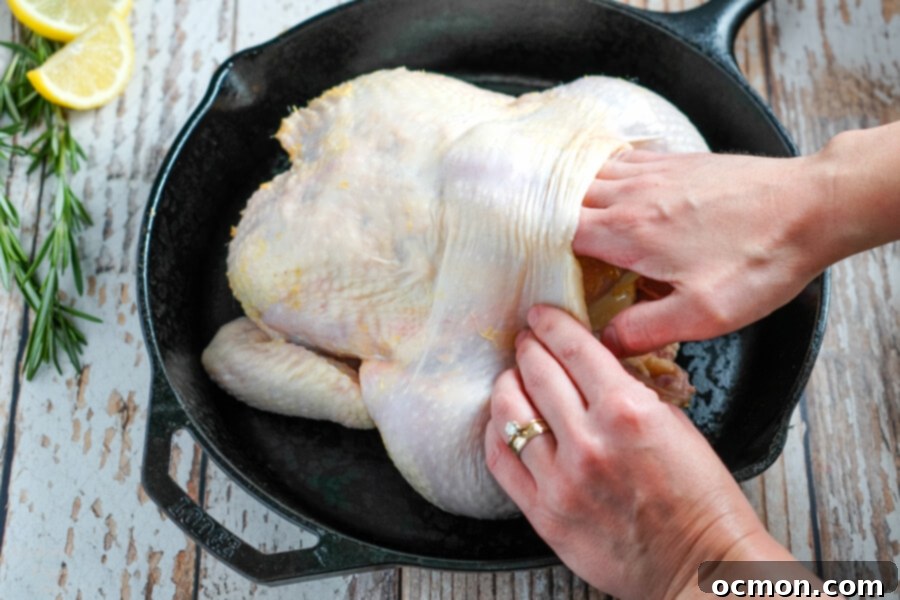
This step might feel a little unusual the first time you do it, but it’s a game-changer for flavor. Gently slide your hand (or the back of a spoon) between the skin and the breast meat of the chicken. The goal is to carefully loosen the skin without tearing it, creating a pocket. Why do we do this? Because it allows you to rub seasonings directly onto the meat, ensuring that every bite is infused with flavor, not just the surface skin.
Step 5: Season Generously and Thoughtfully
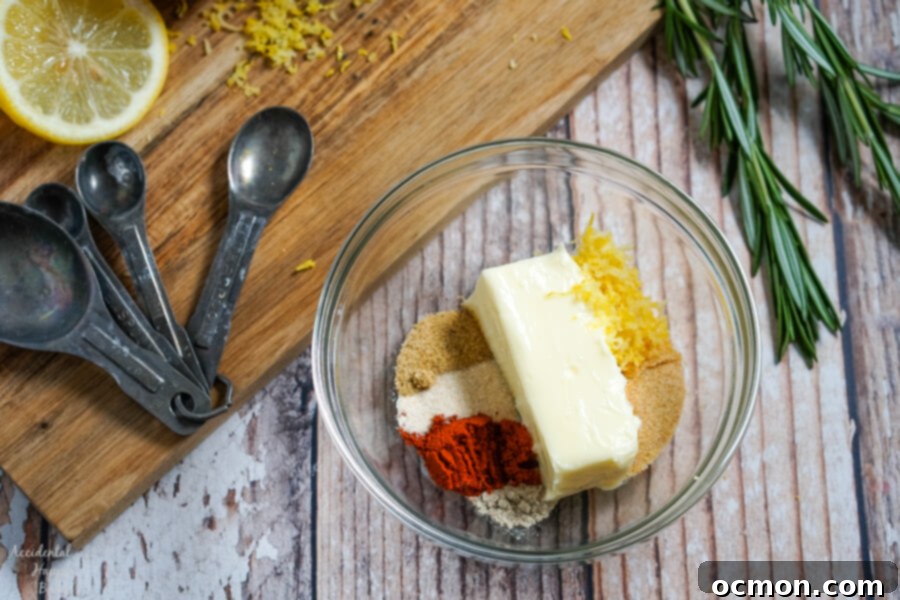
Now for the fun part: seasoning! I highly recommend using a spiced butter mixture. Softened butter is the perfect vehicle for carrying flavors and helps create that coveted crispy, golden-brown skin. In a small bowl, combine your softened butter with the lemon zest and dry seasonings (seasoned salt, paprika, onion powder, garlic powder, white pepper). Mix well until everything is incorporated.
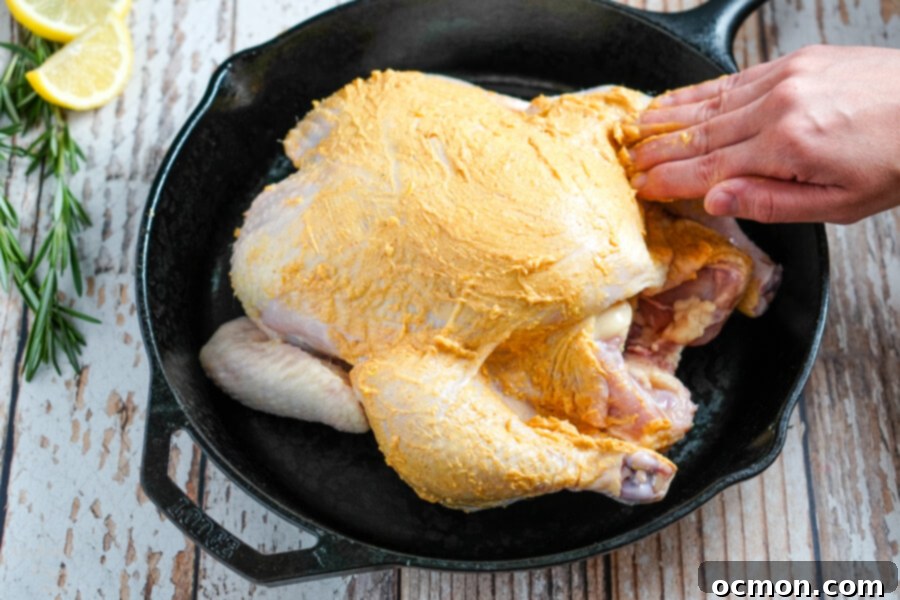
Generously rub this seasoned butter mixture both under the loosened skin (directly onto the breast meat) and all over the outside of the chicken. Don’t forget the back and legs! This ensures deep flavor and beautiful browning. If you’re adding anything to the cavity of the chicken for aromatic purposes, now is the time. This recipe calls for lemon quarters and fresh rosemary sprigs, which impart a wonderful fragrance and subtle flavor. Other excellent choices for the cavity include garlic cloves, onion wedges, or even a small amount of stuffing for added moisture and flavor.
Step 6: Trussing the Chicken (Optional, but Recommended)
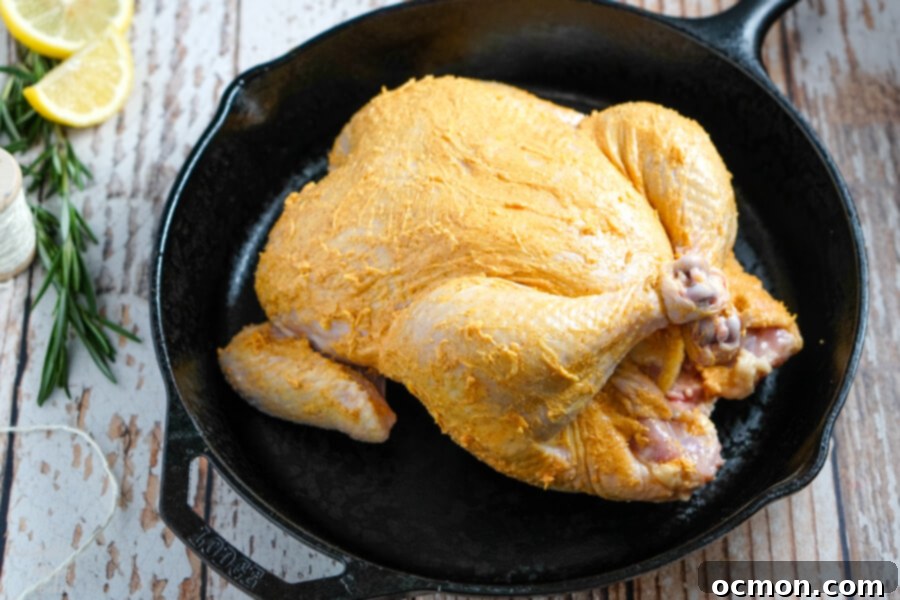
Trussing is simply a fancy term for tying the chicken’s legs together and tucking its wings. While completely optional, it offers several benefits. Trussing helps the chicken cook more evenly by keeping the leg and wing meat closer to the body, preventing the extremities from drying out before the breast is done. It also creates a more compact, aesthetically pleasing shape, which looks wonderful when presented at the table. You can use kitchen twine, unflavored and unwaxed dental floss, or even plain old sewing thread if you have a kit on hand.
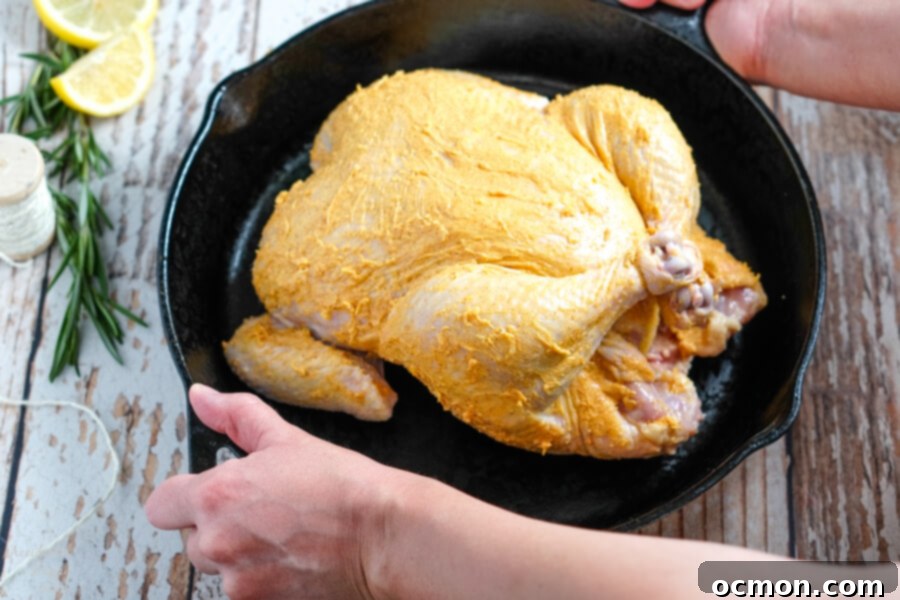
Step 7: Roast to Perfection
Preheat your oven to 375°F (190°C). This temperature is ideal for achieving both tender meat and crispy skin. Place your prepared chicken in the hot oven. The seasoned butter you applied will work wonders, helping the skin to brown beautifully and crisp up. Keep an eye on your chicken as it roasts. Sometimes, the skin can get too browned before the internal meat is fully cooked. If you notice it browning too quickly, typically about halfway through the roasting time, simply cover the chicken loosely with a sheet of aluminum foil. This acts as a shield, preventing further browning while allowing the chicken to continue cooking through.
The cooking time will vary depending on the size of your chicken, usually ranging from 1 hour to 1 hour 30 minutes. The most reliable way to determine if your chicken is ready is by checking its internal temperature with a meat thermometer. Insert the thermometer into the thickest part of the thigh, making sure not to touch any bone. The chicken is done when the internal temperature reaches 175°F (80°C). The juices should also run clear when you pierce the thigh with a knife. For optimal tenderness, some chefs prefer to pull it at 165°F and let carryover cooking bring it to 170-175°F while resting.
Step 8: Rest, Carve, and Serve
Once your chicken reaches the correct internal temperature, remove it from the oven. This next step is non-negotiable for juicy meat: let the chicken rest for 10-15 minutes before carving. Resting allows the juices, which have been driven to the center of the bird during cooking, to redistribute throughout the meat. If you carve it too soon, those precious juices will run out onto your cutting board, leaving you with drier chicken.
After resting, it’s time to carve. I’ll admit, carving a whole chicken is an art form that I’m still perfecting. But don’t let that deter you! Here’s a fantastic link that explains and demonstrates carving better than I ever could. With a sharp knife and a little practice, you’ll get the hang of it.
And that’s it! It might seem like a long list of instructions, and the first time or two it might feel a little awkward. But I promise you, with each roasted chicken, you’ll gain confidence and efficiency. Soon, you’ll be an expert at creating this classic, comforting meal. Boom, roasted!
Tips for the Juiciest, Crispiest Roasted Chicken
- Start Dry: Always pat your chicken exceptionally dry before applying any seasonings. This is the secret to truly crispy skin.
- Season Liberally: Don’t be shy with seasonings, especially salt. The chicken can handle it, and it’s essential for flavor. Getting seasoning under the skin is key.
- Room Temperature: If time allows, let your chicken sit out for about 30 minutes at room temperature before roasting. This helps it cook more evenly.
- Don’t Overcrowd the Pan: Ensure your chicken has enough space in the pan for air to circulate, which aids in browning and crisping.
- Use a Meat Thermometer: Seriously, this is the most important tool for preventing dry chicken and ensuring food safety.
- Rest, Rest, Rest: As mentioned, don’t skip the resting step! It makes all the difference in moisture and tenderness.
Serving Suggestions for Your Roasted Chicken
This classic lemon-rosemary roasted chicken is incredibly versatile. Here are some of my favorite side dishes that complement its flavors perfectly:
- Roasted Vegetables: Carrots, potatoes, Brussels sprouts, or asparagus roasted alongside the chicken or separately with a drizzle of olive oil, salt, and pepper.
- Mashed Potatoes: Creamy, buttery mashed potatoes are a timeless pairing.
- Rice Pilaf or Quinoa: Light and fluffy, these absorb the wonderful pan juices.
- Green Beans Almondine: A simple yet elegant vegetable side.
- Garden Salad: A fresh, crisp salad with a light vinaigrette offers a refreshing contrast.
- Gravy: If you collect the pan drippings, you can easily whip up a flavorful gravy to serve over the chicken and sides.
Storing Leftovers & Creative Meal Ideas
Leftover roasted chicken is a treasure! Once cooled, carve any remaining meat from the bones and store it in an airtight container in the refrigerator for up to 3-4 days. Here are some ideas for repurposing your leftovers:
- Chicken Salad: Shredded chicken, mayonnaise, celery, herbs, and a squeeze of lemon. Perfect for sandwiches or wraps.
- Chicken Tacos or Quesadillas: Shredded chicken with your favorite taco seasonings, cheese, and tortillas.
- Quick Chicken Soup: Combine shredded chicken with homemade stock, noodles, and vegetables for a comforting meal.
- Chicken Pasta: Toss with pasta, a light sauce, and some steamed vegetables.
- Chicken Pizza Topping: A delicious addition to homemade or store-bought pizza.
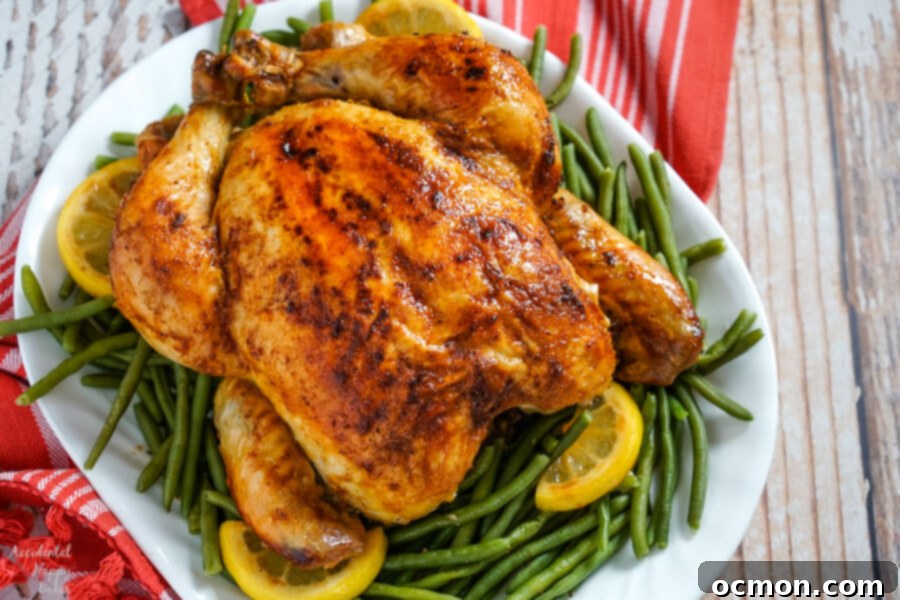
Classic Oven Roasted Chicken with Lemon & Rosemary
Print
Rate
SaveSaved!
Ingredients
- 1 whole fryer chicken (approx. 3-4 lbs)
- 1 large lemon
- 2 sprigs fresh rosemary
- 1/3 cup unsalted butter (softened to room temperature)
- 1/2 teaspoon seasoned salt
- 1/2 teaspoon paprika
- 1/2 teaspoon onion powder
- 1/2 teaspoon garlic powder
- 1/4 teaspoon white pepper
Instructions
-
Preheat your oven to 375°F (190°C). Carefully remove any giblets or neck from inside the chicken cavity. Rinse the chicken thoroughly under cold water, then pat it very dry, both inside and out, with paper towels. Zest half of the lemon.
-
In a small bowl, combine the softened butter with the lemon zest, seasoned salt, paprika, onion powder, garlic powder, and white pepper. Mix until well combined. Gently loosen the skin over the breast meat of the chicken by sliding your hand underneath it. Rub about half of the seasoned butter mixture directly under the skin onto the breast, and then rub the remaining butter mixture all over the outside of the chicken, including the legs and back.
-
Quarter the zested lemon and place the lemon pieces along with the fresh rosemary sprigs inside the cavity of the chicken. If desired, truss the chicken by tying the legs together with kitchen twine to ensure more even cooking and a neater appearance.
-
Place the chicken in a roasting pan or a cast iron skillet. Bake in the preheated oven for 1 hour to 1 hour 30 minutes, or until the juices run clear when pierced and an instant-read meat thermometer inserted into the thickest part of the thigh (without touching bone) registers 175°F (80°C).
-
If the chicken skin begins to brown too quickly before the chicken is fully cooked, loosely cover it with a piece of aluminum foil to prevent burning.
-
Once roasted, remove the chicken from the oven and let it rest, uncovered, for 10-15 minutes before carving. This crucial step allows the juices to redistribute, ensuring a tender and moist chicken. Carve and serve immediately.
Nutrition

Did you make this recipe?
I would absolutely love to hear from you! Your feedback helps others discover delicious meals and encourages me to keep sharing. Please take a moment to leave a comment or review below. Share your thoughts on how your chicken turned out, any adjustments you made, or what you served it with!
I’d also love to see what you’ve been making on Instagram or Facebook! Don’t forget to tag me or use the hashtag #AccidentalHappyBaker so I can see your creations!
Accidental Happy Baker is a participant in the Amazon Services LLC Associates Program, an affiliate advertising program. As an Amazon Associate I earn from qualifying purchases at amazon.com.